Where Can I Buy Wooden Boxes?
- Wooden box
- 25 Aug ,2026
Buying wooden boxes sounds simple until a business needs hundreds or thousands of consistent pieces. Material, finish, size, MOQ, customization, and quality can quickly make supplier selection difficult.
You can buy wooden boxes from direct manufacturers, wooden packaging factories, wholesalers, packaging distributors, and B2B sourcing platforms. For bulk or custom commercial orders, direct manufacturers are often a better option because they can provide custom sizes, materials, finishes, logos, inserts, and more competitive volume pricing.
The right buying channel depends on the purpose of the box. A basic storage box has very different requirements from a luxury wine box, jewelry box, watch box, or branded gift box. Before asking for prices, buyers should define the product, quantity, target quality, customization needs, and delivery plan.
Which Manufacturers Sell Wooden Boxes in Bulk?
Finding a supplier with wooden boxes is easy. Finding a manufacturer that can produce thousands of boxes with the same size, color, finish, and construction is much harder.
Wooden product manufacturers, custom packaging factories, luxury packaging manufacturers, and export-oriented wooden box factories commonly sell wooden boxes in bulk. Direct manufacturers are usually suitable for B2B orders because they can support larger quantities, custom specifications, sampling, quality control, branded packaging, and repeat production.
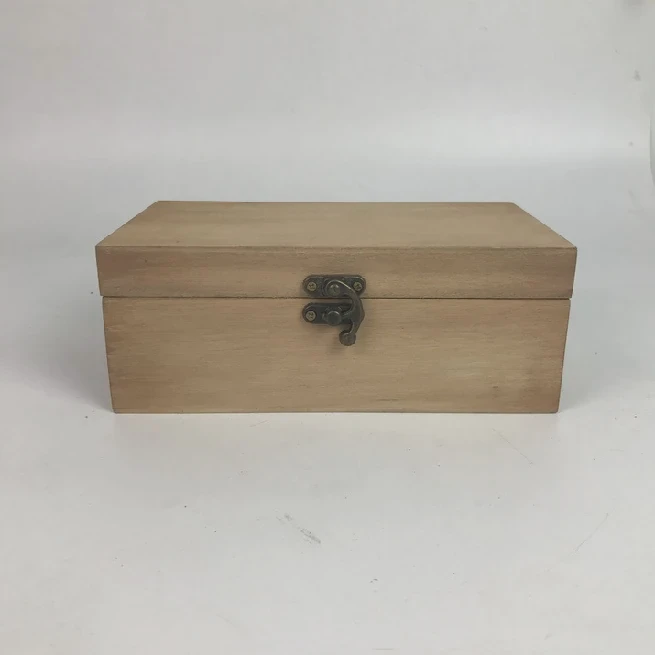
When sourcing in bulk, I normally separate suppliers into manufacturers, wholesalers, and trading companies. Each option can work, but they solve different purchasing problems.
Direct Wooden Box Manufacturers
A direct wooden box manufacturer is usually the first place to look when a project requires customization.
These factories can produce wooden boxes based on product dimensions, drawings, reference images, or existing samples. Depending on their production capabilities, buyers can change the size, shape, opening structure, material, surface finish, logo, hardware, insert, and outer packaging.
This flexibility is useful for many commercial applications. Jewelry brands may require small wooden boxes with velvet inserts. Watch companies may need larger boxes with watch pillows. Wine and whiskey brands may want strong presentation boxes with metal hardware. Tea, chocolate, perfume, candle, and gift companies may focus more on appearance and the unboxing experience.
Volume is another reason to work directly with a manufacturer.
Factories normally build their pricing around production quantity. Cutting, painting, printing, tooling, setup, and packaging costs can be spread across a larger number of units. For this reason, the unit price may decrease as order quantity increases.
Still, buyers should not select a factory only because it offers the lowest price.
Wooden Box Wholesalers
Wholesalers can be useful when buyers need standard wooden boxes.
A wholesaler may keep common sizes and structures in stock. This can reduce lead time because the buyer does not need to wait for a complete custom production cycle.
The trade-off is that customization is usually more limited.
A wholesaler may allow simple laser engraving or printing, but it may not be able to change the dimensions, internal structure, wood thickness, hinges, or surface finish.
This option works best when the existing box already matches the product.
Trading and Export Companies
Trading companies can also supply bulk wooden boxes. They may work with several factories and provide sourcing, communication, inspection, and logistics support.
This can be useful when a buyer wants several different packaging products from one source.
However, buyers should understand whether the company is producing the boxes or purchasing them from another factory. This affects pricing, communication, production control, and problem solving.
| Supplier Type | Best Use | Customization Level | Main Benefit |
|---|---|---|---|
| Direct manufacturer | Custom bulk orders | High | Strong production control |
| Wooden box wholesaler | Standard boxes | Low to medium | Faster purchasing |
| Packaging distributor | Small or repeat standard orders | Low | Local availability |
| Trading company | Multi-product sourcing | Medium to high | Easier sourcing coordination |
| Export manufacturer | International B2B orders | High | Production and export experience |
Production Capability Matters
A factory should also match the size of the order.
A small workshop may produce excellent handmade samples but struggle with 20,000 boxes. A very large factory may have strong capacity but may not be interested in a very small project.
I would ask about normal monthly production capacity, sample lead time, mass production lead time, equipment, quality control, and experience with similar products.
The answers help show whether the manufacturer fits the project.
Bulk purchasing works best when the buyer chooses a supplier based on the actual application rather than simply searching for the cheapest wooden box.
How Do I Find Reliable Custom Wooden Box Suppliers?
Custom wooden box sourcing can go wrong even when product photos look excellent. Samples may not match mass production, specifications can be misunderstood, and delivery dates can change without warning.
To find reliable custom wooden box suppliers, buyers should compare manufacturing experience, samples, factory capabilities, quality systems, customization options, communication, capacity, and previous export experience. A detailed RFQ followed by sampling and specification approval is one of the most effective ways to test a supplier before mass production.
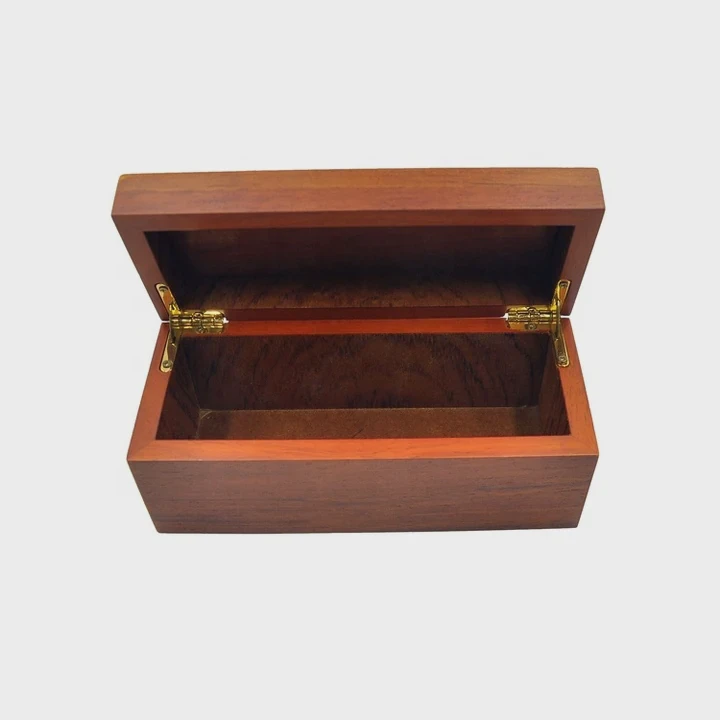
Supplier research should start before asking for the lowest possible quotation. A buyer needs enough information to decide whether the supplier can actually make the required product.
Start With a Detailed RFQ
I prefer to send suppliers a clear request for quotation instead of a message that only says, “How much is this wooden box?”
The supplier cannot give an accurate answer without knowing what needs to be produced.
A useful RFQ should include the expected quantity, external dimensions, internal dimensions, product size, preferred material, box structure, finish, logo, hardware, insert, individual packaging, destination, and required delivery date.
Reference images are useful too.
If a buyer already has CAD files, drawings, Pantone colors, artwork, or physical samples, these can make communication much faster.
Check Real Customization Capabilities
The word “custom” can mean different things to different suppliers.
One supplier may only change the logo. Another manufacturer may be able to develop a completely new box from the beginning.
For a fully custom project, buyers may need control over several areas:
- Dimensions and shape
- Hinged, sliding, drawer, or removable lid structures
- Solid wood, MDF, plywood, bamboo, or veneer
- Natural, matte, painted, stained, or high-gloss surfaces
- Laser engraving, hot stamping, UV printing, or metal logos
- Hinges, locks, clasps, handles, and magnetic closures
- EVA, velvet, PU leather, paper, or wooden inserts
- Individual bags, gift boxes, cartons, and pallets
A supplier does not need every possible process inside one building. It does need a stable way to control the processes required for the project.
Order a Sample
Samples are one of the most useful supplier tests.
A sample lets the buyer inspect dimensions, construction, color, finish, logo quality, hardware, insert fit, and overall appearance.
It also tests communication.
If a supplier repeatedly misunderstands basic instructions during sampling, the same communication problems may become much more expensive during mass production.
I would record every change made after the first sample. The final approved version should have a drawing or specification sheet.
The supplier and buyer should both know which version represents the production standard.
Look Beyond Product Photos
Good photographs can help buyers understand a supplier’s style, but photos alone cannot prove production ability.
Buyers can ask for factory information, production videos, equipment lists, quality processes, certification documents when relevant, and examples of similar projects.
A video meeting can also be useful when an on-site factory visit is not practical.
The goal is not to collect documents for no reason. The goal is to understand how the supplier will turn a drawing into thousands of consistent products.
Reliable sourcing is based on evidence, not only sales promises.
What Should Businesses Consider When Sourcing Wooden Boxes?
Wooden boxes can look similar in online photographs while having very different materials, construction, finish quality, and production costs. A simple price comparison can therefore give buyers the wrong answer.
Businesses sourcing wooden boxes should consider material, structure, finish, customization, MOQ, unit price, sample quality, production capacity, lead time, quality control, packaging, certifications, shipping, and total landed cost. These factors should be compared under the same product specification before a supplier is selected.
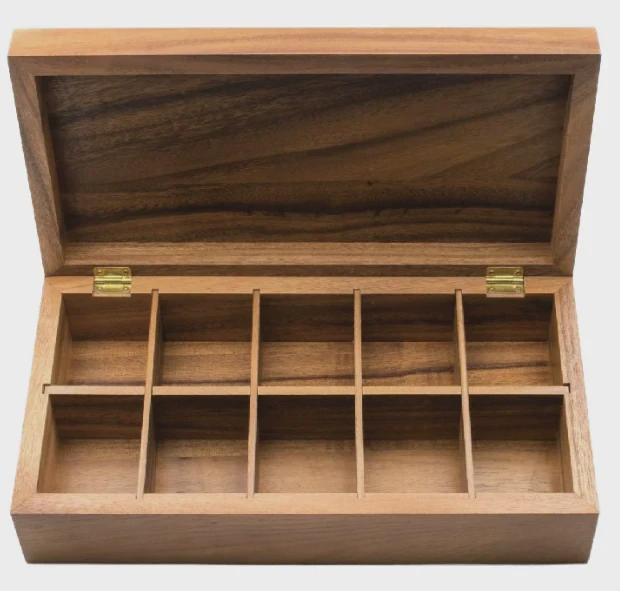
A good sourcing decision starts with the product requirement. Buyers should know what the wooden box needs to achieve before deciding which material or supplier to use.
Choose Materials Based on the Application
Material has a major effect on appearance, weight, strength, and price.
Solid wood gives a natural feel and visible grain. It can work well for premium products where the material itself is part of the presentation.
MDF provides a smooth and stable base. It can be painted or covered with natural veneer, engineered veneer, decorative paper, PU leather, or fabric.
Plywood can be useful when strength and structural stability matter. Bamboo can also be considered for certain designs.
No single material is automatically the best.
A luxury-looking box does not always require expensive solid wood. An MDF structure with a carefully selected veneer and high-quality finish can create a very refined appearance.
The correct choice depends on the design, budget, quantity, and target market.
Examine Surface Finishing
Surface finishing strongly affects how customers see a wooden box.
Natural grain, clear lacquer, wood stain, matte paint, semi-matte paint, and high-gloss finishes create very different results.
High-gloss finishes can create a premium appearance, but they can also show scratches and dust more easily. Natural wood surfaces may look warmer, but grain and color can vary between pieces.
Buyers should decide which variations are acceptable before production.
Consider MOQ and Price Together
MOQ should fit the company’s purchasing plan.
A low unit price is not useful if the buyer must purchase far more boxes than needed.
For example, a growing brand may prefer 500 units at a slightly higher price rather than 5,000 units at a lower unit price. The smaller order reduces inventory risk and leaves room for future design changes.
Large brands may have the opposite requirement. They may value stable high-volume production and repeatable pricing more than a very low MOQ.
| Factor | What to Check | Business Impact |
|---|---|---|
| Material | Wood type, board, veneer, thickness | Cost, strength, appearance |
| Structure | Lid, hinges, joints, opening method | Function and durability |
| Finish | Color, texture, paint, lacquer | Brand presentation |
| MOQ | Minimum production quantity | Inventory and cash flow |
| Sample | Accuracy against specification | Reduces production risk |
| Capacity | Monthly production ability | Delivery reliability |
| Lead time | Sample and production schedule | Launch planning |
| Quality control | Inspection standards and records | Batch consistency |
| Packaging | Individual and export protection | Damage rate |
| Shipping | Weight, volume, freight method | Landed cost |
Quality Control Should Be Defined Early
Quality should not be judged only after thousands of boxes are finished.
Raw materials can be checked before production. Dimensions can be checked after cutting. Structures can be tested during assembly. Surface finishing and logos can be inspected before final packing.
Hardware should also be tested.
Hinges should open correctly. Locks should align. Magnets should have suitable strength. Inserts should hold the product securely.
For premium packaging, cosmetic inspection is especially important. Scratches, dust, glue marks, color differences, uneven logos, and damaged corners can make a functional box unacceptable to the final customer.
Think About Total Landed Cost
Factory price is only one part of the purchasing cost.
Wooden boxes can be heavy and take considerable shipping space. Buyers should request carton dimensions, carton quantity, gross weight, total cubic volume, and pallet information before confirming large orders.
This makes freight estimation much easier.
A slightly more expensive box that packs efficiently may have a lower landed cost than a cheaper box with inefficient packaging.
This is why I prefer to review manufacturing and logistics together rather than treating them as two separate purchasing decisions.
Are Wholesale Wooden Boxes Suitable for Commercial Packaging?
Businesses sometimes see wooden boxes as expensive gift packaging rather than practical commercial packaging. This can cause them to overlook applications where presentation and perceived value are important.
Yes. Wholesale wooden boxes are suitable for commercial packaging, especially for jewelry, watches, wine, whiskey, cigars, tea, perfume, chocolate, gifts, collectibles, and other premium products. They provide strong protection, flexible customization, and a high-value appearance that can improve product presentation and the customer experience.
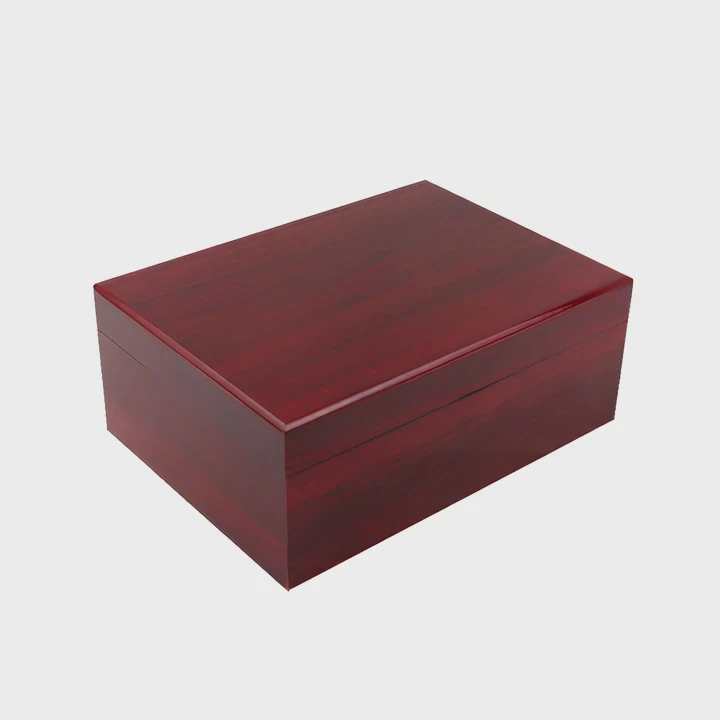
Wooden boxes are not the right packaging for every product. They are heavier and usually more expensive than basic paper cartons. Their commercial value becomes clearer when packaging plays an important role in how the product is sold.
Premium Product Presentation
A wooden box can change how a customer sees the product before the product itself is used.
This matters for luxury and gift products.
A watch inside a fitted wooden presentation box creates a different experience from the same watch inside a basic cardboard carton. The product has not changed, but its presentation has.
The same idea applies to wine, whiskey, jewelry, perfume, tea, chocolate, cigars, coins, collectibles, and corporate gifts.
For these categories, packaging can become part of the product rather than something customers immediately throw away.
Branding Options
Wooden boxes provide many branding possibilities.
A simple natural box can use laser engraving. A painted box can use UV printing or silk screen printing. Premium packaging can include hot-stamped details, metal logo plates, metal letters, embossed elements, or custom labels.
Branding should match the product instead of being added simply because a process is available.
A small engraved logo may work better for a natural tea box. A metal plate may fit a whiskey presentation box. A clean hot-stamped mark may work better for jewelry packaging.
The goal should be a consistent brand experience.
Custom Inserts Improve Function
The inside of the box matters as much as the outside.
A custom insert can hold the product in position and improve presentation. Common options include EVA foam, velvet, PU leather, paper, wood, removable trays, dividers, bottle holders, ring slots, and watch pillows.
The insert should be designed around the real product dimensions.
I would avoid approving an insert only from a drawing when the product has an unusual shape. A physical fitting test can reveal pressure points, loose areas, or problems removing the product.
Commercial Durability
A wholesale packaging box also needs to survive real commercial handling.
Products may move from a factory to a warehouse, distributor, retailer, and final customer. Each step creates opportunities for scratches, impacts, dust, and moisture.
The wooden box itself may be strong, but its finished surface still needs protection.
Individual bags, foam sheets, bubble protection, inner cartons, master cartons, corner protection, and pallets can be used depending on the product and shipping method.
Premium finishes usually need more protection.
Repeat Orders Need Consistency
Commercial packaging often involves repeat orders. This makes production consistency important.
A brand may place 2,000 units today and another 5,000 units six months later. Customers should not see an obvious difference between the two batches.
The supplier therefore needs clear records for material, dimensions, colors, finishes, logos, hardware, and inserts.
Approved samples and specification sheets become valuable references for repeat production.
Wholesale wooden boxes make the most sense when the packaging supports the value of the product. They can provide protection, presentation, branding, and a reusable experience in one package. For businesses selling premium products, those benefits can justify the higher cost compared with simple disposable packaging.
Conclusion
Businesses can buy wooden boxes from direct manufacturers, wholesalers, distributors, and export suppliers. For bulk or custom projects, buyers should compare materials, samples, customization, capacity, quality control, packaging, and landed cost. The right supplier should support both product presentation and reliable repeat production.